Aviation Switching Module – NSN 4920-01-250-2696 (AS-IS / Untested): Military Aviation Electrical Module
Aviation Switching Module – NSN 4920-01-250-2696 (AS-IS / Untested): Military Aviation Electrical Module
Blog Article
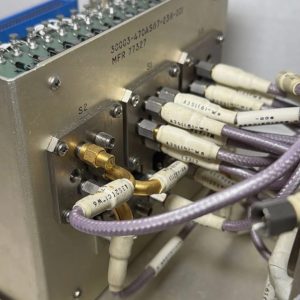
The Aviation Switching Module – NSN 4920-01-250-2696 (AS-IS / Untested) should be purchased with the understanding that no operational, calibration, serviceability, compatibility, or installation guarantee is being made.
An Aircraft Switching Module may control, route, select, isolate, or distribute compatible electrical signals or circuits, while an Aerospace Switching Module should be evaluated according to its exact internal design and intended equipment relationship.
Every Aircraft Power Switching Module or Aircraft Signal Switching Module should be assessed individually because connectors, voltage, current, control logic, and system compatibility can vary significantly.
The Aviation Control Module may be associated with a larger Aircraft Electronic Switching System, while the Aerospace Switching Unit and Aircraft Electrical Module should be inspected before connection or installation.
Key Details of the Untested Switching Module
The seller should provide clear photographs of every label, marking, connector, switch, control, mounting point, enclosure surface, and included accessory.
Unknown markings should be photographed and recorded rather than interpreted without support.
Buying an Untested Aviation Module
AS-IS and untested means the module is offered without confirmation that it powers on, switches circuits, communicates with associated equipment, meets specifications, or performs its original function.
Professional evaluation protects the module, technician, test equipment, and any associated aerospace system.
Aviation Switching Hardware Uses
The product page should avoid assigning a cockpit, power-distribution, test-set, or mission-system function without evidence.
Switch movement can be checked gently for obvious binding or damage, but mechanical movement does not establish electrical operation.
Maintaining a Switching Module Assembly
Age, handling, impact, humidity, temperature changes, contamination, and long-term storage can affect both mechanical and electrical condition.
Connector damage can prevent proper mating or create electrical shorts even when the module enclosure remains intact.
Aircraft Electrical Switching Module Inspection
External condition cannot confirm the state of hidden relays, contacts, circuit boards, wiring, or internal components.
Loose wires, nonstandard components, replaced relays, cut conductors, or evidence of field repair should be recorded.
Maintaining Electrical Control Equipment
Similar-looking modules may use completely different pin assignments and operating voltages.
Missing labels or faded markings can make operation difficult and may increase the risk of improper testing.
Choosing an Aircraft Power Switching Module
Controlled bench evaluation should be completed by personnel familiar with aerospace electrical hardware.
Power-input and output terminals should be checked for looseness, heat discoloration, corrosion, damaged insulation, and unsuitable previous repair.
Aerospace Electrical Control Unit Evaluation
Visual inspection, continuity checks, insulation review, component identification, and controlled testing may form part of a professional evaluation.
Undocumented modifications can make future troubleshooting and identification more difficult.
Maintaining Aircraft Interface Hardware
Signal circuits can be sensitive to grounding, shielding, contact resistance, connector condition, and electromagnetic interference.
The module should not be modified with unshielded wiring or improvised connectors solely for convenience.
Control Module Compatibility Review
An Aviation Control Module should be treated as one component within a larger system rather than a standalone universal controller.
A matching NSN or housing does not always confirm identical internal configuration when modifications or supersessions exist.
Commercial Value of an Untested Switching Unit
A complete but untested unit may have different value from an incomplete component known to contain damage.
Training use should avoid destructive modifications when the component has collectible or restoration value.
Power Distribution Module Inspection
An Aerospace Power Distribution Module generally manages or routes electrical power among compatible circuits, although the exact function of this NSN should not be assumed without supporting information.
Mounting points should be inspected because secure installation can affect grounding, cooling, vibration resistance, and connector alignment.
Choosing an Aircraft Electrical Control Unit
The inspection should distinguish cosmetic wear from damage that may affect electrical operation or mounting.
Testing results should identify exactly which switches, contacts, indicators, or circuits were evaluated.
Choosing an Aviation Power Control Module
Responsible product information protects buyers seeking an Aviation Power Control Module.
Technicians should inspect for capacitors, transformers, relays, damaged insulation, or hazardous residues before opening or testing the unit.
Electronic Switching Module Applications
A systems approach supports more accurate troubleshooting and restoration.
Professional analysis supports responsible Aircraft Electronic Switching System maintenance.
Preserving Military Aviation Equipment
Desiccant or moisture-control materials should not contact electrical components directly unless appropriate.
The module should be enclosed in a moisture-resistant protective layer and placed inside a strong outer carton or suitable shipping case.
Buying AS-IS Aviation Electronics
The potential cost of connectors, manuals, test equipment, repairs, components, and specialist labor should be included in the buying decision.
Remote buyers should request current photographs of the actual unit instead of relying on catalog images or pictures of similar equipment.
Inspecting the Aviation Switching Module Before Purchase
The buyer should request enough information for an aviation electronics technician, aerospace-equipment specialist, or experienced surplus buyer to evaluate the unit.
- Confirm that the identification plate shows NSN 4920-01-250-2696 and record every manufacturer number, serial number, contract marking, revision, and modification label.
- Inspect switches, knobs, indicators, connectors, pins, wiring, and terminals for damage, looseness, contamination, overheating, or unauthorized repair.
- Confirm the written invoice, AS-IS terms, payment protection, packaging method, shipping insurance, inspection period, and return conditions.
Professional Bench Evaluation
The module should not be powered until input requirements, polarity, grounding, circuit protection, and expected loads are understood.
Partial operation should not be presented as complete certification, calibration, or airworthiness.
Aerospace Module Component Replacement
Restoration should begin with condition documentation, careful cleaning, technical research, component identification, fault isolation, and repair planning.
Every repair should record the date, technician, fault found, parts replaced, measurements, testing performed, and remaining limitations.
Final Thoughts on the Untested Aircraft Switching Module
For the right purchaser, Aerospace Switching Module the unit can offer a useful foundation for technical research, controlled troubleshooting, component recovery, or legacy-equipment restoration.
The component should be judged according to complete project suitability rather than clean appearance, military-surplus interest, part-number rarity, or price alone.
Whether the product is described as an Aircraft Switching Unit, Aerospace Power Distribution Module, Aircraft Electrical Control Unit, or Aviation Power Control Module, AS-IS limitations should remain clear.
With transparent condition reporting, secure shipping, controlled testing, appropriate repair methods, and accurate records, the unit can support a professional aerospace project.
Report this page